Most gas fireplaces in seasonal houses get the same treatment in spring: the owner turns the knob to off, or closes the gas key, and leaves. Six months later the knob turns, the igniter clicks, and nothing happens. Or the pilot catches, burns for a minute and dies. Or the flame comes up tall and orange, and the glass fogs over within ten minutes.
Those are the calls Delaney Chimney Contractors gets each fall from owners in Cudahy and nearby cities whose gas fireplace sat unused. This post covers what goes wrong in those months, what our service visit includes, and how the price is set before any part is changed. It is written for owners booking a technician. Should the house smell of gas, get everyone outdoors first, then phone the gas company once you are clear of the building.
What months of sitting do to a gas fireplace
A gas fireplace has fewer parts than a wood fireplace has bricks, but the parts it has are small and easy to block:
- Spiders like the pilot tube and the small air openings on burners, and their webs starve the flame
- Dust settles on the pilot hood and the flame sensor, and a dirty sensor reads the flame as absent
- Batteries in remote receivers and some ignition modules run flat over summer
- Lint and pet hair drawn in by the room fan coat the controls under the firebox
- The vent cap outside gathers leaves or a nest, which changes how the unit breathes
Each one gives a slightly different fault. A pilot that will not catch at all points to gas supply or ignition. A pilot that catches and drops out points to the sensor. A soft, sooty flame points to air. Our technician starts from what you saw, so tell us that when you book.
What the service visit covers
Our gas fireplace cleaning visit for a unit that sat idle includes:
- Taking the glass off, cleaning both faces, and checking the seal that holds it
- Cleaning the burner, the log set and the ember material, then setting the logs back where the maker shows them
- Clearing the pilot assembly and cleaning the flame sensor
- Lighting the unit and watching the pilot and the main flame over several minutes
- Looking at the vent cap outside for blockage and damage
- Testing the remote and its batteries where the unit has one
You get a short report that says what was cleaned, what was tested, and what, if anything, failed. If a part has to be replaced, we write the part and its price down and you decide before we fit it.
What decides the price
We publish no single figure for gas fireplace work, because a cleaning and a failed valve are very different jobs. What sets your price:
1. The kind of unit: a vented log set in an old masonry fireplace, an insert, or a sealed unit built into a wall 2. Whether it only needs cleaning, or a part has failed 3. Which part: a sensor or thermocouple costs far less than a valve or control module 4. Whether the maker still supplies the part for your model 5. How hard the vent is to reach on the roof or wall
The cleaning visit is priced when you book, once we know the kind of unit. Parts are listed and priced in writing on site before any are changed. To get the booking price, say whether it is logs in an old fireplace or a unit behind glass, and what the pilot did.
Logs, inserts and sealed units are three different visits
Owners often call all three a gas fireplace. For us they differ:
- A log set burning in an old masonry fireplace uses the chimney to carry exhaust away, so we also check the flue and the clamp that holds the damper open
- An insert sits inside an old fireplace with a liner running up the old chimney, so the liner and the cap are part of the visit
- A sealed unit built into a wall vents through its own pipe, so we check where that pipe ends outside
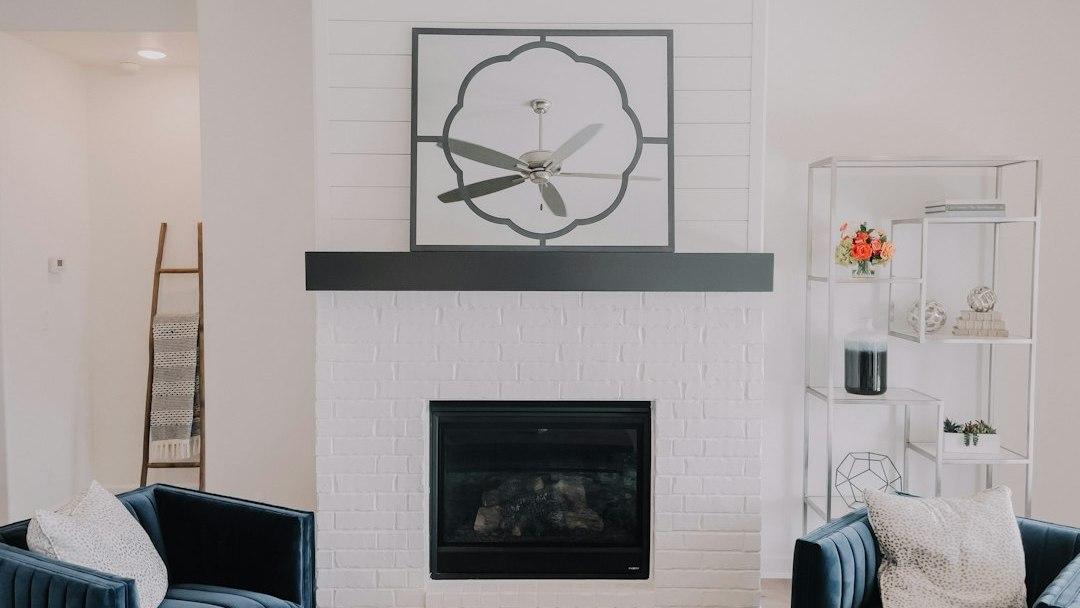
If you are not sure which you have, describe what you see on the form: whether there is glass across the front, whether old brick shows around it, and where the vent comes out.
Replacing a unit that is past repair
Some units in older seasonal homes are past saving. Parts are no longer made, the glass is cracked, or the valve has failed and costs nearly as much as a new unit. When that happens we say so plainly and lay out the options. Swapping the old unit for a new gas insert, fitted by us, costs $2,650 to $5,250. Our fireplace inserts page explains that work, and our gas fireplace repair page covers the repairs short of replacement.
Leaving the unit at the end of a stay
What happens at departure shapes what we find on arrival. When you book an opening visit, ask us to note on the report how this unit should be left at the end of your stay: pilot on or off, remote batteries in or out. Some units handle a short absence better with the pilot left burning; others are better shut down. The report tells you which applies to your model, so the next season starts easier.
A chimney check alongside it
If the gas logs sit in an old masonry fireplace, the chimney above them still matters. Birds nest in gas flues as readily as in wood ones. Pairing the gas visit with a $52 Level 1 look at the chimney covers both in one trip; our pre-season cost guide explains when a $370 Level 2 is the better choice.
In Cudahy and the rest of the South Coast air district, winter brings days when wood burning is restricted. Gas units are the fireplaces owners can still use on those evenings, which is one more reason to have yours working before the cold arrives.
Next step
If the knob clicks and nothing happens, or the flame looks wrong, go to our contact page, tell us the kind of unit and what it did, and we will set the visit ahead of your next cold evening there.
Want the Chimney Checked Before You Light It?
Delaney Chimney Contractors looks at the cap, crown, flue, damper and firebox on houses that sat empty, and sends photos to whoever you name. We cover Cudahy, Norwalk, Monterey Park, Los Angeles and the towns around them.